The Peppol network has evolved into the international standard for secure, structured, and interoperable electronic business transactions. As of 2026, nearly 50 countries and territories are members of OpenPeppol, the non-profit organization governing the Peppol network. Here’s the complete Peppol country guide.
Updated June 16th 2026
Global B2B interoperability — now a reality
From Europe to Asia-Pacific, North America, and Africa, the network continues to expand, enabling businesses and public sectors to exchange e-invoices, e-orders, and other business documents across borders through a single, trusted digital infrastructure.
Peppol provides a standardized method for exchanging business messages, including e-invoices, e-orders, and credit notes. Every participant connects through certified service providers — known as Access Points — and identifies themselves with a Peppol ID.
This setup eliminates the need for custom integrations or bilateral connections. Whether your counterpart is a public authority in Finland or a supplier in Singapore, Peppol ensures that your business documents arrive securely and in the correct format.
Discover the key differences between Peppol and traditional B2B message exchanges (VAN).
Peppol country availability
Peppol now includes:
- All EU member states plus the UK, Norway, Switzerland, and Iceland
- Major global economies such as the US, Canada, Japan, China, India, and Australia
- Growing participation across Asia (Singapore, Malaysia, Taiwan) and the Middle East (UAE), with Africa accelerating — Nigeria became the continent’s first Peppol Authority in 2025, and South Africa is piloting
Countries participate in the Peppol network at different levels — some operate as national authorities, others host certified service providers, while a few are connected through pilot or associate memberships.
- Peppol Authority & Certified providers
Countries that manage a national Peppol Authority and host certified service providers enabling full network governance and access. - Certified providers
Countries with certified Peppol service providers but without a national Peppol Authority. - Other
Countries or territories connected through other membership types or pilot participation in the Peppol network.
This expansion marks Peppol’s transition from a European e-invoicing initiative to a global interoperability framework.
Peppol country guide
Australia
Peppol is the official standard for public sector e‑invoicing and is widely used by the private sector, with more than 400,000 businesses and over 300 government agencies and councils registered. Concrete public-sector milestones apply in 2026 — at least 30% of Non-Corporate Commonwealth Entity invoices must be processed via e-invoicing by July 1, 2026, and agencies must be able to send and process Peppol e-invoices by December 2026 — though there is no broad B2B mandate yet.
Austria
Austria mandates Peppol for B2G transactions, boosting interoperability and e-procurement nationwide. The country has strong infrastructure and public sector compliance.
Belgium
Belgium requires all suppliers to the public sector to send e-invoices via Mercurius, integrated with Peppol. Mandatory structured B2B e-invoicing took effect on January 1, 2026, based on the Peppol BIS 3.0 standard and a decentralised model, with a tolerance period that ended on March 31, 2026.
Bulgaria
Bulgaria has required B2G e-invoicing since 2020. There is no mandatory B2B e-invoicing yet, but a phased structured tax-reporting (SAF-T) regime begins in 2026 and runs to 2030, with real-time e-reporting via Peppol Access Points planned. B2B e-invoices can currently be exchanged voluntarily by mutual agreement.
Canada
Peppol was introduced in 2019, but diverse regulations and low awareness have hampered its adoption. Access points operate, but there is no national mandate yet.
China
China participates in Peppol primarily through certified access points in pilot programs. Adoption focuses on international business rather than nationwide mandates.
Croatia
Croatia’s Fiscalization 2.0 reform made structured B2B e-invoicing and real-time e-reporting mandatory from January 1, 2026 for VAT-registered taxpayers. The framework is Peppol-based, with FINA acting as a certified Peppol Access Point, and the full phase-out of paper invoices is expected by January 1, 2027.
Cyprus
Cyprus is an OpenPeppol member with public entities using Peppol for B2G e-invoicing. National legislation promotes the wider adoption of public procurement.
Czech Republic
The Czech Republic facilitates cross-border e-invoicing through Peppol, adhering to EU standards. Private sector adoption is growing alongside public mandates.
Denmark
Denmark was the first country to require e-invoicing for public procurement, using NemHandel and Peppol since 2005, making it a global pioneer. Under the 2022 Bookkeeping Act, mandatory digital bookkeeping and B2B e-invoicing capability are being phased in, reaching smaller enterprises from 2026, with NemHandel and Peppol (Peppol BIS / OIOUBL) as the exchange channels.
Estonia
Estonia mandates Peppol-based e-invoicing in the public sector. Since July 1, 2025, any company registered as an e-invoice recipient can require structured e-invoices (EN 16931 / Peppol BIS 3.0) from its suppliers, and a broader mandatory B2B regime is under consideration for around 2027.
Finland
Finland requires all suppliers to public sector entities to send e-invoices that comply with the European Standard. Since April 2024, government procurement contracts have been mandated to use Peppol Advanced Ordering for electronic purchase orders and responses. The Finnish State Treasury acts as the national Peppol Authority, and these measures are advancing digital B2G trade, making Peppol a cornerstone of public procurement workflows in Finland.
France
France utilizes the central Chorus Pro platform, which supports Peppol for B2G and B2B transactions.
France officially designated its tax authority (DGFiP) as the national Peppol Authority in July 2025, ahead of its major B2B e-invoicing mandate. The government is actively developing technical standards, has launched the PPF Directory for invoice routing, and requires businesses to use certified platforms with Peppol connectivity. Public sector Peppol use is well established, and the B2B pilot phase went live in February 2026. From September 1, 2026, all businesses must be able to receive e-invoices, while large and mid-sized enterprises must also issue them and submit e-reporting to the DGFiP; SMEs and micro-enterprises follow on September 1, 2027.
More information on Peppol services in France.
Germany
Germany requires public entities to accept e-invoices via Peppol, though suppliers can choose formats, and national platforms like XRechnung integrate Peppol for interoperability. Since January 1, 2025, all domestic B2B businesses must be able to receive structured e-invoices, with mandatory issuance phased in during 2027–2028 according to company size.
More infromation on E-Rechnung and Peppol in Germany.
Greece
B2G e-invoicing is mandatory in Greece, with Peppol used as the B2G exchange route and data reported to the national myDATA platform. Mandatory B2B e-invoicing via myDATA is being phased in during 2026 — large enterprises from March 2, 2026 (with a transition period to May 3, 2026), and remaining businesses from October 1, 2026.
Hungary
Hungary is an OpenPeppol member, actively developing its e-invoicing frameworks. Full-scale B2G deployment is in progress.
Iceland
Iceland mandates Peppol e-invoicing in the public sector, leveraging its advanced digital infrastructure. The private sector is encouraged to adopt the network for cross-border trade.
India
India’s mandatory e-invoicing runs on the national GST system rather than Peppol: in-scope B2B invoices must be registered on an Invoice Registration Portal (IRP) to obtain an Invoice Reference Number (IRN) and QR code — a centralised clearance model. The mandate now covers businesses with annual turnover of ₹5 crore and above. Peppol use in India remains limited.
Ireland
Ireland’s public procurement office uses Peppol for mandatory B2G e-invoicing. Significant progress has been made in bridging public and private sector platforms.
Italy
Italy mandates electronic invoicing through the SdI platform, which supports Peppol for B2G and B2B exchanges. Peppol ensures compliance, security, and tax transparency.
Japan
Japan became a Peppol Authority in 2021 through the Digital Agency, which maintains the JP PINT invoice standard. Using Peppol for e-invoicing is voluntary but actively encouraged, and adoption is growing alongside the Qualified Invoice System introduced in October 2023 for consumption tax. There is no Peppol mandate.
Jordan
Jordan pilots Peppol for government-to-business e-invoicing, aiming to standardize procurement. Expansion into wider commerce is planned.
Latvia
Latvia has required B2G e-invoicing since January 1, 2025. Mandatory B2B e-invoicing was postponed from 2026 to January 1, 2028, with voluntary submission via the eAddress system from March 2026; in-scope invoices must follow the Peppol BIS Billing 3.0 standard.
Lithuania
Lithuania’s public entities use Peppol, with steadily growing adoption in e-invoicing and procurement reforms. National law supports further digitization using OpenPeppol.
Luxembourg
Luxembourg requires Peppol in B2G, using various access points for public entities. The Ministry for Digitalisation spearheads implementation.
Malaysia
Malaysia is rolling out mandatory e-invoicing in phases via the MyInvois platform, using Peppol for interoperability. Large taxpayers began in August 2024, followed by mid-sized businesses in 2025, with smaller businesses (annual turnover RM1–5 million) joining from January 1, 2026 under a penalty-free relaxation period that runs to December 31, 2027. Businesses with annual turnover below RM1 million are exempt.
Malta
Malta leverages Peppol for public sector e-invoicing as part of digital government reforms. B2B enablement is being expanded.
Mexico
Mexico’s e-invoicing is in pilot stages, with Peppol used mainly for international business. National mandates are not yet in place.
Netherlands
Peppol is required for public sector e-invoicing in the Netherlands, supporting EU-wide trade. Simplerinvoicing, an initiative based on Peppol, streamlines transactions.
New Zealand
A large and growing number of NZ businesses are registered for e-invoicing via Peppol, with public sector mandates active. Government suppliers will be required to use Peppol, as Government agencies with more than 2,000 domestic invoices per year must be e-invoice capable by January 1, 2026; large suppliers by January 1, 2027.
Nigeria
Nigeria’s tax authority, FIRS, became Africa’s first national Peppol Authority in 2025. Mandatory B2B e-invoicing through the Merchant Buyer Solution (MBS) platform — aligned with Peppol and UBL — began on November 1, 2025 for large taxpayers (annual turnover of ₦5 billion or more), with medium-sized taxpayers (₦1–5 billion) following from July 1, 2026.
Norway
Norway is a Peppol founding member and has mandated Peppol/EHF for public sector e-invoicing since 2019. A B2B mandate is advancing — mandatory issuance of structured e-invoices is planned for January 1, 2027, with mandatory receiving and fully digital bookkeeping following by 2030.
More information on EHF and Peppol in Norway.
Poland
Poland requires Peppol for B2G e-invoicing, alongside the national KSeF platform. Mandatory B2B e-invoicing via KSeF began on February 1, 2026 for large taxpayers (2024 turnover above PLN 200 million), with most other businesses following on April 1, 2026 and micro-enterprises from January 1, 2027. A penalty-free period applies throughout 2026.
Portugal
Portugal mandates B2G e-invoicing — large companies since 2021 and SMEs and micro-enterprises from January 1, 2026 — integrated with the eSPap platform. There is no B2B clearance mandate; for B2B, PDF invoices count as electronic only if issued in a structured format or signed with a Qualified Electronic Signature, a requirement deferred to January 1, 2027.
Romania
Romania operates a centralised clearance model through the RO e-Factura (SPV) platform rather than Peppol exchange. B2B e-invoicing has been mandatory since July 1, 2024 using the CIUS_RO format, and was extended to B2C from January 1, 2025. A grace period for small businesses (annual turnover below €500K) applies until July 1, 2026.
Serbia
Serbia uses Peppol for pilot digital documents and e-invoicing reforms. Expansion is planned as digitalization accelerates.
Singapore
Peppol adoption is led by the InvoiceNow system. Since November 2025, newly incorporated companies that voluntarily register for GST must transmit invoice data to IRAS via InvoiceNow, with the requirement extended to all new voluntary GST registrants from April 1, 2026. The GST InvoiceNow requirement will then be progressively extended to all GST-registered businesses, with the final phase by April 2031. Singapore remains a regional trailblazer.
Slovakia
Slovakia mandates Peppol for public sector e-invoicing. Legislation effective January 1, 2026 introduces mandatory B2B e-invoicing and real-time e-reporting from January 1, 2027, using a Peppol five-corner (DCTCE) model in which businesses exchange structured EN 16931 invoices directly while reporting data to the Financial Administration — the national Peppol Authority. Voluntary live exchange is possible from May 2026, with cross-border transactions following on July 1, 2030 in line with the EU’s ViDA timetable. Learn more about Slovakia e-invoicing, eFaktúra, and Peppol solutions.
Slovenia
Slovenia mandates Peppol for public sector e-invoicing. Mandatory B2B e-invoicing is planned for January 2027 (postponed from mid-2026), with Peppol or accredited service providers as the exchange options; an earlier proposal for near real-time reporting to the tax authority was dropped.
South Africa
South Africa is piloting Peppol in the public sector, with a focus on interoperability with EU trade partners. Further mandates are under discussion.
Spain
Spain uses Peppol for B2G e-invoicing compliance. Under Royal Decree 238/2026, which implements the Crea y Crece Law, mandatory B2B e-invoicing will be phased in from October 1, 2027 for businesses with annual turnover above €8 million and from October 1, 2028 for all other businesses. Separately, the VeriFactu verified-billing-software requirements — postponed by a year in December 2025 — now apply from January 1, 2027 for corporate taxpayers and July 1, 2027 for the self-employed.
Sweden
Sweden requires Peppol for all public sector e-invoicing, relying on the SFTI platform for compliance. National mandate in place since 2019. Widespread access points support business and government.
Switzerland
Switzerland is an OpenPeppol member. E-invoicing to the federal administration has been mandatory for contracts above CHF 5,000 since 2016 (Peppol BIS is among the accepted formats), while Peppol uptake in the broader public and private sectors continues to grow. There is no B2B mandate.
Taiwan
Taiwan is piloting Peppol for e-invoicing, with a focus on international B2B exchange. National reforms are under consideration.
Turkey
Peppol pilots in Turkey aim to facilitate digital trade between the private sector and the government. Widespread adoption is still forthcoming.
UAE
The UAE is implementing a Peppol-based DCTCE (five-corner) e-invoicing model under Ministerial Decisions No. 243 and 244 of 2025. A pilot phase begins in July 2026, with mandatory e-invoicing for businesses with annual revenue above AED 50 million from January 1, 2027, and further phases to follow. Invoices must be exchanged through an accredited service provider. Learn more about UAE e-invoicing readiness, key deadlines, and requirements.
UK
The UK utilizes Peppol for NHS transactions and public sector e-invoicing, with cross-border trade being well supported. B2B adoption is expanding post-Brexit.
USA
Peppol is widely used in pilots and private sector initiatives, but it lacks a federal mandate. Adoption is growing among businesses seeking global interoperability.
The Digital Business Networks Alliance (DBNA) is the U.S. e-invoicing association, modeled after Europe’s Peppol network. Both use a similar 4-corner model and open, standardized technical specifications to allow businesses to exchange electronic documents.
Get connected: Peppol services with Qvalia
As a certified Peppol Access Point, Qvalia enables companies of all sizes to send and receive Peppol-compliant documents instantly.
Through Qvalia Connect, users can join the network immediately.
- Register a Peppol ID in minutes
- Receive and manage e-invoices, e-orders, and more
- Achieve full Peppol compliance without technical complexity
- Integrate via API or use Qvalia’s web interface
- Start for free, upgrade as you scale
Our platform supports the latest Peppol BIS standards, providing visibility, control, and automation across the entire transaction flow.
Outlook
With nearly 50 countries now on board, Peppol is becoming the backbone of digitalization in global trade. Governments and enterprises alike recognize its potential to reduce costs, increase transparency, and unlock automation. At Qvalia, we continue to support this growth by helping organizations connect, comply, and innovate on B2B transactions.
For further reading on compliance, e-invoicing, and Peppol, download the latest Billentis report, Riding the Tornado (2026).
Related articles
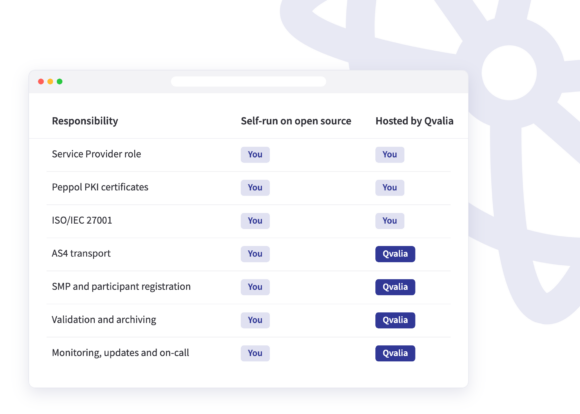
How to set up your own Peppol Access Point: run it yourself on open-source software such as Oxalis or phase4, or outsource operations to a Hosted Access Point. What each route covers, the 2027 network requirements and national accreditation.
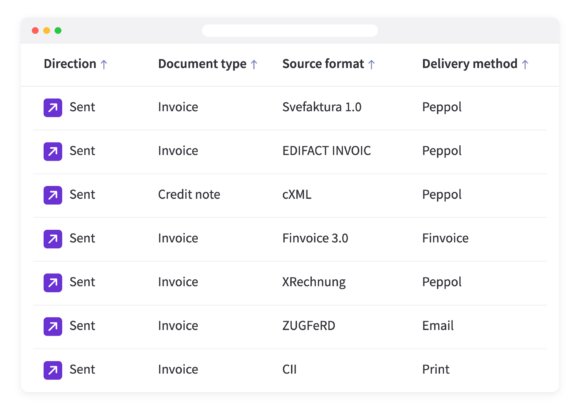
Qvalia’s Transaction API now accepts Svefaktura 1.0, EDIFACT, cXML, Finvoice, XRechnung, CII and ZUGFeRD, converts them to Peppol BIS Billing 3.0 and delivers them.
Qvalia is now connected to ELMA, the Norwegian Digitalisation Agency’s receiver register for the Norwegian market. This means we can register our customers in …