The Peppol network has evolved into the international standard for secure, structured, and interoperable electronic business transactions. As of 2026, nearly 50 countries and territories are members of OpenPeppol, the non-profit organization governing the Peppol network. Here’s the complete Peppol country guide.
Updated June 16th 2026
Wereldwijde B2B-interoperabiliteit — nu een realiteit
Van Europa tot Azië-Pacific, Noord-Amerika en Afrika blijft het netwerk zich uitbreiden, waardoor bedrijven en overheidsinstanties via één enkele, betrouwbare digitale infrastructuur grensoverschrijdend e-facturen, e-bestellingen en andere zakelijke documenten kunnen uitwisselen.
Peppol biedt een gestandaardiseerde methode voor het uitwisselen van zakelijke berichten, waaronder e-facturen, e-bestellingen en creditnota’s. Elke deelnemer maakt verbinding via gecertificeerde dienstverleners — ook wel ‘Access Points’ genoemd — en identificeert zich met een Peppol ID.
Met deze oplossing zijn aangepaste integraties of bilaterale verbindingen overbodig. Of uw tegenpartij nu een overheidsinstantie in Finland is of een leverancier in Singapore, Peppol zorgt ervoor dat uw zakelijke documenten veilig en in het juiste formaat aankomen.
Ontdek de belangrijkste verschillen tussen Peppol en traditionele B2B-berichtuitwisselingssystemen (VAN).
Beschikbaarheid van Peppol per land
Peppol omvat nu:
- Alle EU-lidstaten, plus het Verenigd Koninkrijk, Noorwegen, Zwitserland en IJsland
- Grote wereldeconomieën zoals de VS, Canada, Japan, China, India en Australië
- Growing participation across Asia (Singapore, Malaysia, Taiwan) and the Middle East (UAE), with Africa accelerating — Nigeria became the continent’s first Peppol Authority in 2025, and South Africa is piloting
Landen nemen op verschillende niveaus deel aan het Peppol-netwerk: sommige treden op als nationale autoriteiten, andere bieden onderdak aan gecertificeerde dienstverleners, terwijl weer andere zijn aangesloten via proef- of geassocieerd lidmaatschap.
- Peppol-autoriteit en gecertificeerde dienstverleners
Landen die een nationale Peppol-autoriteit beheren en gecertificeerde dienstverleners huisvesten, waardoor volledig netwerkbeheer en toegang mogelijk zijn. - Gecertificeerde aanbieders
Landen met gecertificeerde Peppol-dienstverleners, maar zonder nationale Peppol-autoriteit. - Andere
Landen of gebieden die via andere lidmaatschapsvormen of proefdeelname aan het Peppol-netwerk zijn aangesloten.
Deze uitbreiding markeert de overgang van Peppol van een Europees initiatief voor elektronische facturering naar een wereldwijd kader voor interoperabiliteit.
Peppol-landengids
Australië
Peppol is the official standard for public sector e‑invoicing and is widely used by the private sector, with more than 400,000 businesses and over 300 government agencies and councils registered. Concrete public-sector milestones apply in 2026 — at least 30% of Non-Corporate Commonwealth Entity invoices must be processed via e-invoicing by July 1, 2026, and agencies must be able to send and process Peppol e-invoices by December 2026 — though there is no broad B2B mandate yet.
Oostenrijk
Oostenrijk stelt Peppol verplicht voor B2G-transacties, waardoor de interoperabiliteit en elektronische aanbestedingen in het hele land worden gestimuleerd. Het land beschikt over een solide infrastructuur en de publieke sector voldoet aan de geldende voorschriften.
België
Belgium requires all suppliers to the public sector to send e-invoices via Mercurius, integrated with Peppol. Mandatory structured B2B e-invoicing took effect on January 1, 2026, based on the Peppol BIS 3.0 standard and a decentralised model, with a tolerance period that ended on March 31, 2026.
Bulgaria
Bulgaria has required B2G e-invoicing since 2020. There is no mandatory B2B e-invoicing yet, but a phased structured tax-reporting (SAF-T) regime begins in 2026 and runs to 2030, with real-time e-reporting via Peppol Access Points planned. B2B e-invoices can currently be exchanged voluntarily by mutual agreement.
Canada
Peppol werd in 2019 geïntroduceerd, maar uiteenlopende regelgeving en een gebrek aan bekendheid hebben de invoering ervan belemmerd. Er zijn wel toegangspunten actief, maar er is nog geen nationale verplichting.
China
China neemt voornamelijk deel aan Peppol via gecertificeerde toegangspunten in proefprojecten. De toepassing richt zich vooral op internationale handel en niet zozeer op landelijke verplichtingen.
Kroatië
Croatia’s Fiscalization 2.0 reform made structured B2B e-invoicing and real-time e-reporting mandatory from January 1, 2026 for VAT-registered taxpayers. The framework is Peppol-based, with FINA acting as a certified Peppol Access Point, and the full phase-out of paper invoices is expected by January 1, 2027.
Cyprus
Cyprus is lid van OpenPeppol en overheidsinstanties maken daar gebruik van Peppol voor elektronische facturering tussen bedrijven en de overheid (B2G). De nationale wetgeving stimuleert een bredere toepassing van elektronische facturering bij overheidsopdrachten.
Tsjechië
Tsjechië maakt grensoverschrijdende e-facturering mogelijk via Peppol, in overeenstemming met de EU-normen. Naast de verplichte invoering door de overheid neemt ook het gebruik in de particuliere sector toe.
Denemarken
Denmark was the first country to require e-invoicing for public procurement, using NemHandel and Peppol since 2005, making it a global pioneer. Under the 2022 Bookkeeping Act, mandatory digital bookkeeping and B2B e-invoicing capability are being phased in, reaching smaller enterprises from 2026, with NemHandel and Peppol (Peppol BIS / OIOUBL) as the exchange channels.
Estland
Estonia mandates Peppol-based e-invoicing in the public sector. Since July 1, 2025, any company registered as an e-invoice recipient can require structured e-invoices (EN 16931 / Peppol BIS 3.0) from its suppliers, and a broader mandatory B2B regime is under consideration for around 2027.
Finland
Finland verplicht alle leveranciers van overheidsinstanties om e-facturen te versturen die voldoen aan de Europese norm. Sinds april 2024 is het bij overheidsopdrachten verplicht om Peppol Advanced Ordering te gebruiken voor elektronische inkooporders en reacties daarop. De Finse Schatkist fungeert als nationale Peppol-autoriteit, en deze maatregelen stimuleren de digitale B2G-handel, waardoor Peppol een hoeksteen vormt van de werkprocessen voor overheidsopdrachten in Finland.
Frankrijk
Frankrijk maakt gebruik van het centrale Chorus Pro-platform, dat Peppol ondersteunt voor B2G- en B2B-transacties.
France officially designated its tax authority (DGFiP) as the national Peppol Authority in July 2025, ahead of its major B2B e-invoicing mandate. The government is actively developing technical standards, has launched the PPF Directory for invoice routing, and requires businesses to use certified platforms with Peppol connectivity. Public sector Peppol use is well established, and the B2B pilot phase went live in February 2026. From September 1, 2026, all businesses must be able to receive e-invoices, while large and mid-sized enterprises must also issue them and submit e-reporting to the DGFiP; SMEs and micro-enterprises follow on September 1, 2027.
More information on Peppol services in France.
Duitsland
Germany requires public entities to accept e-invoices via Peppol, though suppliers can choose formats, and national platforms like XRechnung integrate Peppol for interoperability. Since January 1, 2025, all domestic B2B businesses must be able to receive structured e-invoices, with mandatory issuance phased in during 2027–2028 according to company size.
More infromation on E-Rechnung and Peppol in Germany.
Griekenland
B2G e-invoicing is mandatory in Greece, with Peppol used as the B2G exchange route and data reported to the national myDATA platform. Mandatory B2B e-invoicing via myDATA is being phased in during 2026 — large enterprises from March 2, 2026 (with a transition period to May 3, 2026), and remaining businesses from October 1, 2026.
Hongarije
Hongarije is lid van OpenPeppol en werkt actief aan de ontwikkeling van zijn kaders voor e-facturering. De grootschalige implementatie voor B2G is momenteel in volle gang.
IJsland
IJsland stelt Peppol-e-facturering verplicht in de publieke sector en maakt daarbij gebruik van zijn geavanceerde digitale infrastructuur. De particuliere sector wordt aangemoedigd om het netwerk te gebruiken voor grensoverschrijdende handel.
India
India’s mandatory e-invoicing runs on the national GST system rather than Peppol: in-scope B2B invoices must be registered on an Invoice Registration Portal (IRP) to obtain an Invoice Reference Number (IRN) and QR code — a centralised clearance model. The mandate now covers businesses with annual turnover of ₹5 crore and above. Peppol use in India remains limited.
Ierland
Het Ierse bureau voor overheidsopdrachten maakt gebruik van Peppol voor de verplichte elektronische facturering tussen bedrijven en de overheid. Er is aanzienlijke vooruitgang geboekt bij het koppelen van platforms in de publieke en private sector.
Italië
Italië stelt elektronische facturering verplicht via het SdI-platform, dat Peppol ondersteunt voor B2G- en B2B-uitwisselingen. Peppol garandeert naleving van de regelgeving, veiligheid en fiscale transparantie.
Japan
Japan became a Peppol Authority in 2021 through the Digital Agency, which maintains the JP PINT invoice standard. Using Peppol for e-invoicing is voluntary but actively encouraged, and adoption is growing alongside the Qualified Invoice System introduced in October 2023 for consumption tax. There is no Peppol mandate.
Jordanië
Jordanië test Peppol uit voor elektronische facturering tussen de overheid en het bedrijfsleven, met als doel de aanbestedingsprocedures te standaardiseren. Uitbreiding naar het bredere bedrijfsleven staat op de planning.
Letland
Latvia has required B2G e-invoicing since January 1, 2025. Mandatory B2B e-invoicing was postponed from 2026 to January 1, 2028, with voluntary submission via the eAddress system from March 2026; in-scope invoices must follow the Peppol BIS Billing 3.0 standard.
Litouwen
Overheidsinstanties in Litouwen maken gebruik van Peppol, en de toepassing ervan neemt gestaag toe in het kader van hervormingen op het gebied van e-facturering en aanbestedingen. De nationale wetgeving ondersteunt verdere digitalisering via OpenPeppol.
Luxemburg
Luxemburg schrijft het gebruik van Peppol voor in de B2G-sector, waarbij verschillende toegangspunten voor overheidsinstanties worden gebruikt. Het ministerie van Digitalisering geeft leiding aan de implementatie.
Maleisië
Malaysia is rolling out mandatory e-invoicing in phases via the MyInvois platform, using Peppol for interoperability. Large taxpayers began in August 2024, followed by mid-sized businesses in 2025, with smaller businesses (annual turnover RM1–5 million) joining from January 1, 2026 under a penalty-free relaxation period that runs to December 31, 2027. Businesses with annual turnover below RM1 million are exempt.
Malta
Malta maakt gebruik van Peppol voor elektronische facturering in de publieke sector, als onderdeel van de hervormingen op het gebied van digitale overheid. De mogelijkheden voor B2B-facturering worden verder uitgebreid.
Mexico
De elektronische facturering in Mexico bevindt zich nog in de proeffase, waarbij Peppol voornamelijk wordt gebruikt voor internationale transacties. Er zijn nog geen nationale voorschriften van kracht.
Nederland
Peppol is in Nederland verplicht voor elektronische facturering binnen de publieke sector en ondersteunt daarmee de handel binnen de EU. Simplerinvoicing, een op Peppol gebaseerd initiatief, stroomlijnt transacties.
Nieuw-Zeeland
A large and growing number of NZ businesses are registered for e-invoicing via Peppol, with public sector mandates active. Government suppliers will be required to use Peppol, as Government agencies with more than 2,000 domestic invoices per year must be e-invoice capable by January 1, 2026; large suppliers by January 1, 2027.
Nigeria
Nigeria’s tax authority, FIRS, became Africa’s first national Peppol Authority in 2025. Mandatory B2B e-invoicing through the Merchant Buyer Solution (MBS) platform — aligned with Peppol and UBL — began on November 1, 2025 for large taxpayers (annual turnover of ₦5 billion or more), with medium-sized taxpayers (₦1–5 billion) following from July 1, 2026.
Noorwegen
Norway is a Peppol founding member and has mandated Peppol/EHF for public sector e-invoicing since 2019. A B2B mandate is advancing — mandatory issuance of structured e-invoices is planned for January 1, 2027, with mandatory receiving and fully digital bookkeeping following by 2030.
More information on EHF and Peppol in Norway.
Polen
Poland requires Peppol for B2G e-invoicing, alongside the national KSeF platform. Mandatory B2B e-invoicing via KSeF began on February 1, 2026 for large taxpayers (2024 turnover above PLN 200 million), with most other businesses following on April 1, 2026 and micro-enterprises from January 1, 2027. A penalty-free period applies throughout 2026.
Portugal
Portugal mandates B2G e-invoicing — large companies since 2021 and SMEs and micro-enterprises from January 1, 2026 — integrated with the eSPap platform. There is no B2B clearance mandate; for B2B, PDF invoices count as electronic only if issued in a structured format or signed with a Qualified Electronic Signature, a requirement deferred to January 1, 2027.
Roemenië
Romania operates a centralised clearance model through the RO e-Factura (SPV) platform rather than Peppol exchange. B2B e-invoicing has been mandatory since July 1, 2024 using the CIUS_RO format, and was extended to B2C from January 1, 2025. A grace period for small businesses (annual turnover below €500K) applies until July 1, 2026.
Servië
Servië maakt gebruik van Peppol voor proefprojecten op het gebied van digitale documenten en hervormingen op het gebied van e-facturering. Naarmate de digitalisering in een stroomversnelling komt, zijn er plannen voor uitbreiding.
Singapore
Peppol adoption is led by the InvoiceNow system. Since November 2025, newly incorporated companies that voluntarily register for GST must transmit invoice data to IRAS via InvoiceNow, with the requirement extended to all new voluntary GST registrants from April 1, 2026. The GST InvoiceNow requirement will then be progressively extended to all GST-registered businesses, with the final phase by April 2031. Singapore remains a regional trailblazer.
Slowakije
Slovakia mandates Peppol for public sector e-invoicing. Legislation effective January 1, 2026 introduces mandatory B2B e-invoicing and real-time e-reporting from January 1, 2027, using a Peppol five-corner (DCTCE) model in which businesses exchange structured EN 16931 invoices directly while reporting data to the Financial Administration — the national Peppol Authority. Voluntary live exchange is possible from May 2026, with cross-border transactions following on July 1, 2030 in line with the EU’s ViDA timetable. Learn more about Slovakia e-invoicing, eFaktúra, and Peppol solutions.
Slovenië
Slovenia mandates Peppol for public sector e-invoicing. Mandatory B2B e-invoicing is planned for January 2027 (postponed from mid-2026), with Peppol or accredited service providers as the exchange options; an earlier proposal for near real-time reporting to the tax authority was dropped.
Zuid-Afrika
Zuid-Afrika voert een proefproject uit met Peppol in de publieke sector, waarbij de nadruk ligt op interoperabiliteit met handelspartners in de EU. Over verdere toepassingsgebieden wordt momenteel overlegd.
Spanje
Spain uses Peppol for B2G e-invoicing compliance. Under Royal Decree 238/2026, which implements the Crea y Crece Law, mandatory B2B e-invoicing will be phased in from October 1, 2027 for businesses with annual turnover above €8 million and from October 1, 2028 for all other businesses. Separately, the VeriFactu verified-billing-software requirements — postponed by a year in December 2025 — now apply from January 1, 2027 for corporate taxpayers and July 1, 2027 for the self-employed.
Zweden
Zweden stelt Peppol verplicht voor alle elektronische facturering binnen de publieke sector en maakt daarbij gebruik van het SFTI-platform om aan de voorschriften te voldoen. Deze nationale verplichting geldt sinds 2019. Een uitgebreid netwerk van toegangspunten ondersteunt zowel het bedrijfsleven als de overheid.
Zwitserland
Switzerland is an OpenPeppol member. E-invoicing to the federal administration has been mandatory for contracts above CHF 5,000 since 2016 (Peppol BIS is among the accepted formats), while Peppol uptake in the broader public and private sectors continues to grow. There is no B2B mandate.
Taiwan
Taiwan voert een proefproject uit met Peppol voor elektronische facturering, waarbij de nadruk ligt op internationale B2B-uitwisseling. Er worden momenteel nationale hervormingen overwogen.
Turkije
De Peppol-proefprojecten in Turkije zijn bedoeld om de digitale handel tussen de particuliere sector en de overheid te vergemakkelijken. Een brede invoering laat nog op zich wachten.
Verenigde Arabische Emiraten
The UAE is implementing a Peppol-based DCTCE (five-corner) e-invoicing model under Ministerial Decisions No. 243 and 244 of 2025. A pilot phase begins in July 2026, with mandatory e-invoicing for businesses with annual revenue above AED 50 million from January 1, 2027, and further phases to follow. Invoices must be exchanged through an accredited service provider. Learn more about UAE e-invoicing readiness, key deadlines, and requirements.
Verenigd Koninkrijk
Het Verenigd Koninkrijk maakt gebruik van Peppol voor transacties binnen de NHS en voor elektronische facturering in de publieke sector, waarbij grensoverschrijdende handel goed wordt ondersteund. Het gebruik binnen de B2B-sector neemt na de brexit toe.
VS
Peppol wordt op grote schaal gebruikt in proefprojecten en initiatieven in de particuliere sector, maar er is geen wettelijke verplichting op federaal niveau. Het gebruik neemt toe onder bedrijven die streven naar wereldwijde interoperabiliteit.
De Digital Business Networks Alliance (DBNA) is de Amerikaanse vereniging voor elektronische facturering, die is gemodelleerd naar het Europese Peppol-netwerk. Beide maken gebruik van een vergelijkbaar vierhoekmodel en open, gestandaardiseerde technische specificaties om bedrijven in staat te stellen elektronische documenten uit te wisselen.
Maak verbinding: Peppol-diensten met Qvalia
Als gecertificeerd Peppol-toegangspunt stelt Qvalia bedrijven van elke omvang in staat om direct Peppol-conforme documenten te verzenden en te ontvangen.
Via Qvalia Connect kunnen gebruikers direct lid worden van het netwerk.
- Registreer Peppol ID enkele minuten een Peppol ID
- Ontvang en beheer e-facturen, e-bestellingen en meer
- Zorg voor volledige Peppol-conformiteit zonder technische complexiteit
- Integreer via de API of gebruik de webinterface van Qvalia
- Begin gratis en breid uit naarmate je bedrijf groeit
Ons platform ondersteunt de nieuwste Peppol BIS-standaarden en biedt inzicht, controle en automatisering in de gehele transactiestroom.
Vooruitzichten
Met inmiddels bijna 50 aangesloten landen groeit Peppol uit tot de ruggengraat van de digitalisering in de wereldwijde handel. Zowel overheden als bedrijven zien het potentieel ervan om kosten te verlagen, de transparantie te vergroten en automatisering mogelijk te maken. Bij Qvalia blijven we deze groei ondersteunen door organisaties te helpen bij het tot stand brengen van verbindingen, het naleven van regelgeving en het innoveren op het gebied van B2B-transacties.
For further reading on compliance, e-invoicing, and Peppol, download the latest Billentis report, Riding the Tornado (2026).
Gerelateerde artikelen

Qvalia is now connected to ELMA, the Norwegian Digitalisation Agency’s receiver register for the Norwegian market. This means we can register our customers in …
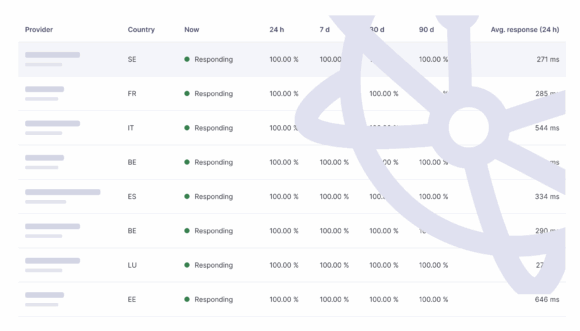
Qvalia’s new public monitor shows the status, measured uptime and response time of the AS4 endpoints of 132 Peppol Access Points in 34 countries.

Peppol provides a standardized infrastructure for exchanging electronic invoices and other business documents. But standardization does not mean that every transaction will work automatically. …