
What is order-to-cash (O2C)?
By Qvalia | Updated September 2026
Order-to-cash (O2C) is the end-to-end process a business follows from the moment a customer places an order to the moment payment is received, covering order management, credit checks, fulfillment, shipping, invoicing, accounts receivable, payment collection, and reporting.
Your sales team has worked hard to find new clients and convince them that your solutions are ideal for their circumstances. When it comes time to order, the last thing you want is for a frustrating transaction experience to muddle an otherwise sure-fire sale.

When it comes to high-volume business-to-business (B2B) transactions, there’s a lot at stake. Having a formal and well-planned out process for B2B payments is paramount to improving your customer experience and encouraging long-time partners to continue working with you.
Improving your sales in B2B commerce is all about simplifying the customer experience, as there are many roadblocks and speed bumps along the way that you have a chance to smooth out. Customers not only have to choose the right products and services that will give them value for their money but also have to work through purchase orders, invoices, and other documentation during the ordering process. Other steps like the use of credit cards add to the cost of the process and come with extra bureaucratic burden to work through, for you and your customers.
For this reason, the finance sector has a name for all the order processing a business handles: the order-to-cash (O2C) process.
In this guide, we’ll explore what the O2C process is, why it matters, and its key components.
Order-to-cash is a subset of your overall sales process. When a customer places an order, you perform these actions in order to deliver the goods or services and receive the payment.
A common mistake online retailers make is treating business clients as if they were consumers. Companies make up a large part of the consumer base and have unique needs that should be addressed in O2C. B2B and B2C transactions differ in several ways:
1. Purchasing options
Sales and discounts notwithstanding, most B2C transactions occur on a single pricing tier, whereas B2B payments are more varied. You might have a basic package for smaller businesses and a professional one for larger enterprises.
2. Client-facing interface
The B2B e-commerce website usually looks like an account dashboard intended to inform so that clients can quickly compare options and make decisions. The website for a B2C transaction is mainly made to look attractive and persuasive to push the conversion.
3. Checkout intricacies
To encourage B2C conversions, you want to make the checkout process as simple and pain-free as possible. Any additional steps can result in abandoned carts, the bane of today’s e-commerce teams. B2B checkouts might as well include all those extra steps to accommodate the added complexity of business-to-business transactions.
The B2B market will take up a larger portion of your O2C activity, while the B2C market can be more complicated to work with.
What’s involved in the O2C process?

We typically consider sales and marketing to be the steps preceding O2C as you attempt to push for conversions from potential buyers, but these efforts are not entirely absent from the O2C process either.
Similarly, even after the order is fulfilled, businesses still continue to record the activity and find new ways to optimize the procedure. These steps are also considered part of order-to-cash.
We will go into detail regarding every step of order-to-cash later on. For now, think of O2C as an umbrella term for order management, credit checks, invoicing, shipping, payment, accounting, debt collection, and other actions related to the fulfillment process.
What about B2B?

Business-to-business refers to the business relationship between companies, for example when a company provides products, services, or both to another company in exchange for money. The customer involved is always another legal entity, organization, company, governmental organization, or NGO.
This is the case for business-to-business (B2B) payments; for example:
- A company subscribing to an app from an internet startup.
- A hospital ordering professional training services from a third-party provider.
- A laptop manufacturer purchasing components like displays or CPUs.
B2B vs. B2C
B2B typically involves larger cash amounts and may be, but not always, more logistically complex compared to B2C (business-to-customer). The result is a generally longer, slower process as more verifications and decisions must be made throughout.
Thanks to the rise of the “as a Service” economy, B2B transactions are likely to increase greatly in the coming years.
Why does order-to-cash matter?
It should be clear as to why order-to-cash deserves attention. It directly contributes to your bottom line, whether you are selling to customers or obtaining invoices for a major purchase from another business.
By taking action regarding your order-to-cash process, you also put yourself in a position to adopt new technologies and trends that will put you ahead of the competition. For instance, roughly a quarter of B2B payments are still made by paper check rather than electronically, which leaves plenty of room for process optimization.
The benefits of optimizing O2C include:
Better financial records
Order-to-cash directly contributes to the way you manage your cash flow. Making sure money is flowing where it needs to is important to avoid delays while ensuring solvency.
Impact on other parts of the company
The order-to-cash process impacts other aspects of the business, from inventory management to the supply chain. If there’s a bottleneck somewhere, its effects will be felt everywhere.
General management
A business with proper O2C procedures is likely to do well in other important aspects of running the company like sales, fulfillment, shipping, and accounting.
The types of B2B payments
The exact payment methods used in these transactions depend on what the suppliers prefer, but the following are some general types. B2B is not as straightforward as B2C, as most of us rely entirely on credit cards or cash whenever we go to a store.

Invoices are the most common transactional document used by sellers. Invoices define the specifics of a transaction, including date of sale, the invoice number, both the supplier and customers full name, address, VAT identifiers, the quantity, description, price, and payment terms for the goods and services, and more.
Learn more about the basics of invoices here
How are B2B invoices paid?
Invoices can be paid through a variety of methods. Here are a few of the most common options:
Cash
Cash is fairly uncommon nowadays, whether we’re talking about B2B or B2C. It’s not always convenient to have all that cash on hand at one time, and you have to be physically located near your supplier for the transaction to go through. Cash also has some problems with security if you’re sending it through the mail. Don’t expect it to be a factor in today’s market.
Check
Just like cash, paper checks have the usual inconvenience and risk of cash. Similarly, processing checks is error-prone and time-consuming. Checks now account for just 26% of B2B payments, down from 81% two decades ago, and the method is rapidly losing traction in favor of digital options.
Wire transfer
Wire transfers have one of the fastest processing times of any B2B payment method, as the funds can generally be used by the receiving party within 24 hours. Wire transfers can be costly to complete, but are ideal for international payments.
Automated Clearing House (ACH)
ACH occurs when money is directly transferred from one bank account to another. Because of the amount of paperwork involved, you aren’t likely to see it used for one-time purchases, but it shines in repeat payments. That is, it’s relatively fast and comes with low fees. Keep in mind though that it’s only available in the United States and can be difficult to reverse if you ever make a mistake. There’s also the privacy concern since you have to share your bank account information for it to happen.
Virtual cards
Credit cards and ACH are already some examples of electronic payments, but another that’s gaining attention in the B2B space is the virtual card. It’s generally free of fees, fast to use, and secure. Expect to see it in the near future for business transactions. As with any credit card, one of the main downsides is the processing fees.
Traditional payment gateways
Some service providers act as the middleman between the sender and recipient of the money. The gateway vendor collects the money and deposits it securely at the destination. A well-known example you might know of is Stripe. Payment gateways can be used in either one-time transactions or recurring ones, though be mindful that you are relying on the expertise of the gateway vendor when you’re using one.
B2B payment gateways
Payment solutions optimized for business customers, with capabilities to send invoices in various formats upon checkout. Authentication of customers can be managed via integrated workflow apps or mandatory accounts with secure log-ins.
Qvalia Autobilling – a B2B payment gateway optimized for e-commerce
A quick breakdown of the order-to-cash process
The order-to-cash process can be broken down into the following general steps: order management, credit management, fulfillment, shipping, invoicing, accounts receivable, payment collection, and reporting.
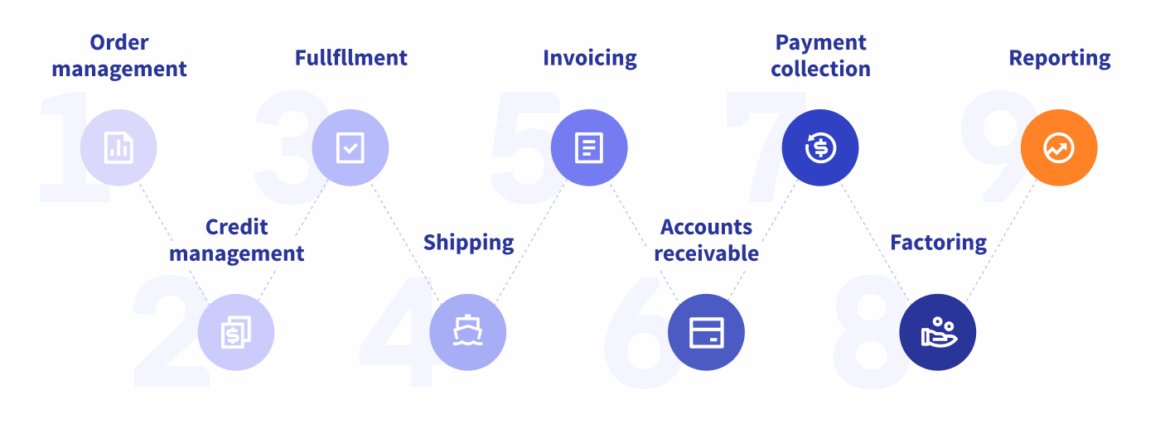
1. Order management
The starting line for the order-to-cash process is when the customer places an order, which can take the form of:
- Emailing your sales team
- Calling a service representative
- Reaching checkout on an e-commerce website
Regardless, the order management phase begins here. Use automation to notify everyone involved about the order and the next steps for it. Only then can you ensure fast fulfillment and order accuracy. The result will ultimately be a satisfied customer and more revenue for you.
2. Credit management
If this purchase is the first for a particular customer, then credit checks might be in order. Automation can help take care of most of the work, while finance employees can cover any cases that require more comprehensive oversight.
Credit management is largely the work of the accounts receivable department, as it allows qualified customers to move on to fulfillment while ensuring that your business only offers credit when it needs to.
Automation solutions make sense here to keep real-time records when they are required. They can also help digitize your orders so that the relevant details are always readable. Handling them through the traditional paper route can lead to errors and inefficiencies.
In the case when you cannot fulfill an order, notify the customer and issue a cancellation to prevent further billing frustrations.
3. Fulfillment
From the vendor’s side, it makes sense to have proper inventory management practices in place so that you aren’t out of stock when a new order comes in.
4. Shipping
The shipping phase of order-to-cash relies heavily on accurate logistics to ensure reliability and speed. Shipping times and pickup schedules are important for making sure orders reach their customers on time.
5. Invoicing
Invoicing delays are notorious for ruining the customer experience. Delays and inaccuracies are inconvenient for everyone, so auditing your invoicing process helps you plan your cash flow and minimize client frustration.
The rapidly accelerating shift from analog invoice formats to e-invoicing moves the paperwork into the digital workspace. By utilizing completely digital formats, and emerging exchange networks for business documents such as Peppol, the digital management provides greater efficiency and gives you more control over the content and accuracy of your invoices. The advantages of e-invoicing are numerous:
Faster payment
A buyer who receives an invoice must painstakingly route it through the approval process. E-invoicing enables a faster payment and thus better cash flow without missing a step of approval.
Lower costs
Better client satisfaction
With fewer late payments, rejected invoices, and general mistakes, a more efficient payment system results in a better customer experience that will have buyers coming back to you.
Compliance
Thanks to better awareness and more controls over the whole process, e-invoicing helps your business stay compliant with regulatory demands regarding accounting and financial management.
6. Accounts receivable

The accounts receivable department is responsible for overseeing any outstanding invoices and responding to any errors that could delay payment. These staff members usually must dive deep into the data of the order-to-cash system so that they can issue a revised invoice as soon as possible.
It’s for this reason why invoicing automation has come to light. Invoices require a notorious amount of manual work and data points, including the order date, shipping times, product specifics, and others. Reducing that load off your staff results in significant performance improvements.
Turn orders into revenue faster with automated order-to-cash
7. Payment collection
If your accounts receivable department is efficient enough, it will process payments from customers fast enough for your O2C process to accept. Otherwise, you risk causing friction with your clients and messing up your cash flow estimates in the long run.
On the other side, you also have to plan for customers being late on their own payments. In this case, the system must automatically notify those clients if they attempt to make further purchases. Your finance teams must similarly review overdue payments and make decisions based on debt forecasts.
8. Factoring
Because invoices often have long payment terms that cause issues with cash flow, companies that sell in B2B markets consult with factoring companies. Factoring is the practice of buying up unpaid invoices at a discounted price so that the owner of the invoices gets the cash faster.
Once a factoring provider receives the invoice, that firm takes over the payment process for the invoice. Factoring makes sense when you’re okay with a lower amount as long as you receive it in a shorter time frame. In other words, you are accelerating cash flow by accepting the money before your client has finished paying off the invoice.
9. Reporting

Awareness of what’s going on in your order-to-cash process matters because it lets you understand how these financial activities impact the rest of your company:
- Relationships with suppliers and clients
- Details regarding the sales cycle
- The quality of customer service
- The consistency with which you handle invoicing
That’s why many software programs have reporting and analytics functions built-in. Order-to-cash is a heavily interconnected process; one delayed step can cause problems for everything else. Management often uses reporting tools to dig out the small issues and address them for better O2C in general.
Top O2C key performance indicators and metrics

Businesses must frequently monitor all aspects of the order-to-cash process to make sure everything’s running properly and efficiently. There are several common metrics that experienced management teams look for in this regard.
Days sales outstanding (DSO)
Also known as DSO, the day’s sales outstanding metric shows us how long it takes for the business to receive the payment after a sale is made. Cash flow can be challenging to keep track of, and managers running the company on credit must know this figure to keep debt in check and track earnings accurately.
Revenue contribution
How much is the order-to-cash process contributing to the total revenue of the business? The higher this figure is, the more you are earning from selling products as opposed to other sources of income. Most management teams would obviously prefer to maximize this value, and it typically takes the form of a percentage of total revenue.
Employee full-time equivalent (FTE)
Full-time equivalent (FTE) is a measure of an employee’s workload. It matters for O2C because you want to know the individual productivity of each staff member related to sales.
If the workload is too high for the number of employees on site, then you have an indicator to assign more staff to that task. Likewise, you might want to drop some people if there are too many.
Measuring FTE is a way to optimize your costs now and help plan for the future when you must decide on how many employees you need for a later project.
Reporting frequency
We’ve mentioned before that reporting and analytics matters in the order-to-cash process, whether we’re looking at the supply chain, the inventory management, the manufacturing, or the logistics.
Regular reports give you an up-to-date picture of how smoothly everything is running and allow you to track key performance indicators directly related to O2C.
Automation rate
Tying into the last point, it’s clear that O2C relies heavily on paperwork, data entry, and analytics. These three tasks are all much faster and more reliable on automated software-based solutions as opposed to traditional manual methods. Adopting automation allows you to increase your throughput, minimize delays, and lower the risk of error. It also often results in better analytics and reporting capabilities. So don’t neglect keeping track of your automation rate and automation potential.
The challenges of implementing O2C payments
Order-to-cash is an essential process, but it’s not without its difficulties. B2B payments can be a hassle to file efficiently for several reasons.
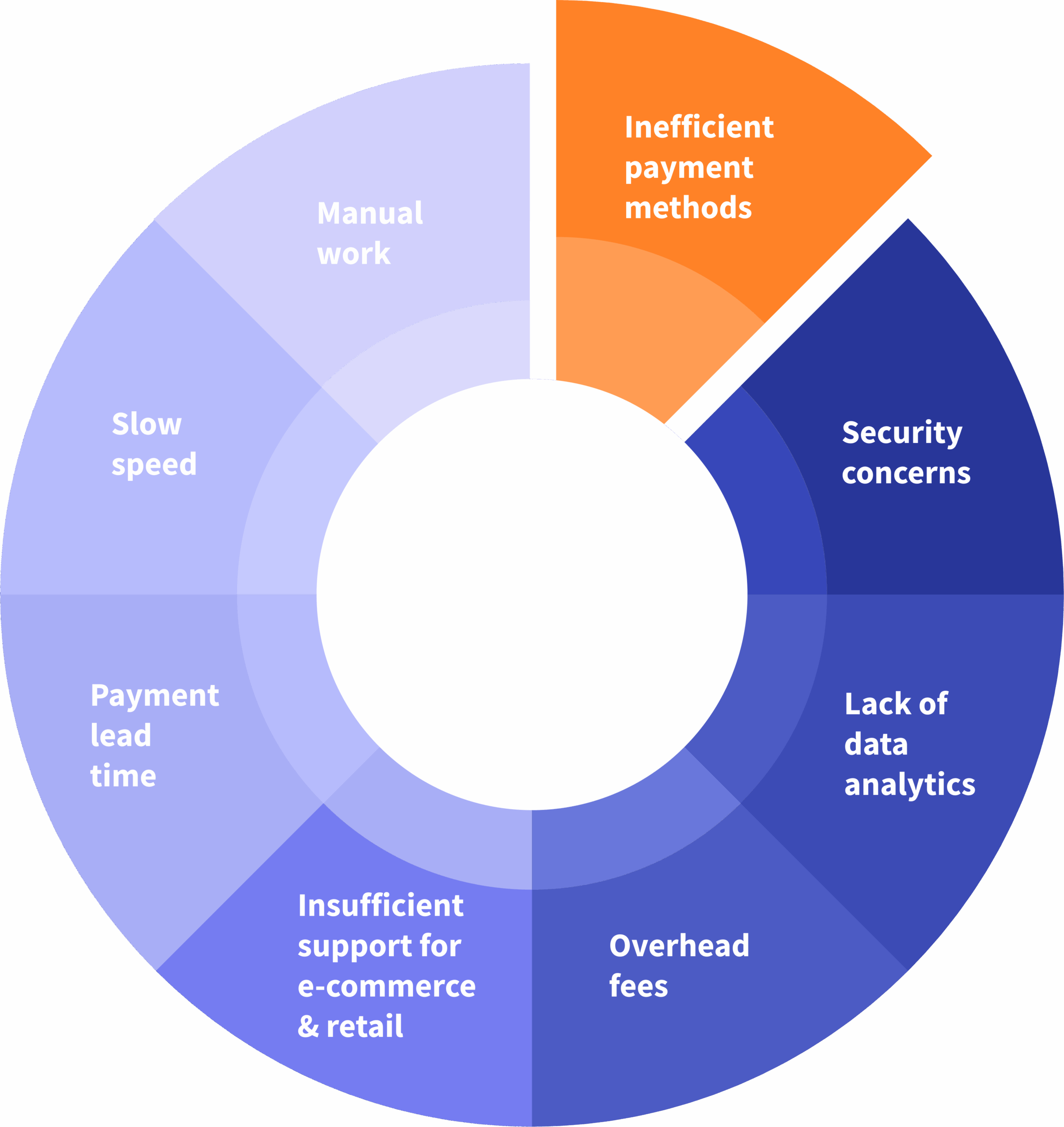
Inefficient payment methods
We’re talking about paperwork. From checks to cash, the traditional methods of payment are just too slow for modern-day operations, yet they still make up 26% of all B2B transactions. Converting to digital is an inevitable change that will take some work to get going.
Manual work
Much of the invoicing done during order-to-cash involves plenty of menial data entry and physical paperwork. Businesses are struggling to balance these types of jobs with more important work that employees could otherwise be doing. Part of financial automation’s appeal lies in freeing up time in the day for other tasks like strategic planning.
Slow speed
A major consequence of the above two problems is a generally slower O2C process. If you cannot speed up this workflow, you run the risk of hitting delays or failing to capitalize on early payment discounts.
Payment lead time
With large B2B transactions, the time it takes for an order to be made and the time for the money itself to show up in the other account can sometimes take a few days. How do you ensure your cash flow is set up in a way to allow that lead time?
Overhead fees
A lot of payment methods require some type of added processing cost, which can add up especially when you have recurring payments. You will have to factor those in when doing your financial planning.
Security concerns
Protecting the sensitive data shared during a transaction matters, as you don’t want to lose the trust of your customers, merchants, or business partners.
Lack of data analytics
Tracking the flow of money is important for maintaining visibility during your transactions and checking for potential errors, yet many businesses don’t have proper systems in place to do so.
Insufficient support for e-commerce and retail
Invoicing software rarely include support for checkout solutions, and traditional payment gateways are, with few exceptions, not optimized for the needs of B2B transactions.
What’s the answer to these impending challenges facing the business sector today?
The role of technology in order-to-cash
A recurring theme of this guide is the role of automation in solving many of the issues companies today are experiencing with regards to the order-to-cash process.

Reducing costs
In addition to the reduced fees of using virtual cards, handling invoices through a B2B payment solution can result in several dollars saved each invoice. These amounts add up for companies managing a lot of orders.
Better performance
Automation always results in better efficiency, but don’t expect it to take over your employees’ jobs entirely. These solutions aim to supplement the workflow so that human staff can focus on more interesting, and value creating, parts of the job.
Reporting features
Having full visibility into the activities of accounts payable and receivable gives you more options for tracking down payment statuses, managing cash flow, and finding new ways to optimize the entire process.
Cybersecurity
The threat of cybercrime is always on our mind, but thankfully many O2C solutions have responded with their own built-in security features to protect against fraud, non-compliance, and other potential threats.
Optimal O2C management lies in having access and control over every step of the process at all times. You’ll also need all the extra tools like digital invoicing, support for e-commerce solutions, payment reconciliation, and automated shipping notifications. Only recently have dedicated financial platforms arisen to allow this type of management in today’s workflows.
Our takeaways
Order-to-cash includes all the activities, tools, and processes businesses undergo to fulfill an order from a customer. From initial purchase to delivery and the data analytics afterwards, there’s a lot that goes into this complex yet essential process.

Companies that master O2C often experience improved customer satisfaction due to fewer payment delays and setbacks. For instance, having a user-friendly B2B payment gateway in place like Qvalia’s Autobilling on your e-commerce website helps B2B customers place orders without any phone calls, expense reporting procedures, or credit cards. Fewer potential points of frustration mean better sales figures.
Automation has also helped a broad range of businesses achieve reliable O2C processes by eliminating menial tasks and facilitating comprehensive visibility, which in turn results in more ways to optimize B2B transactions.
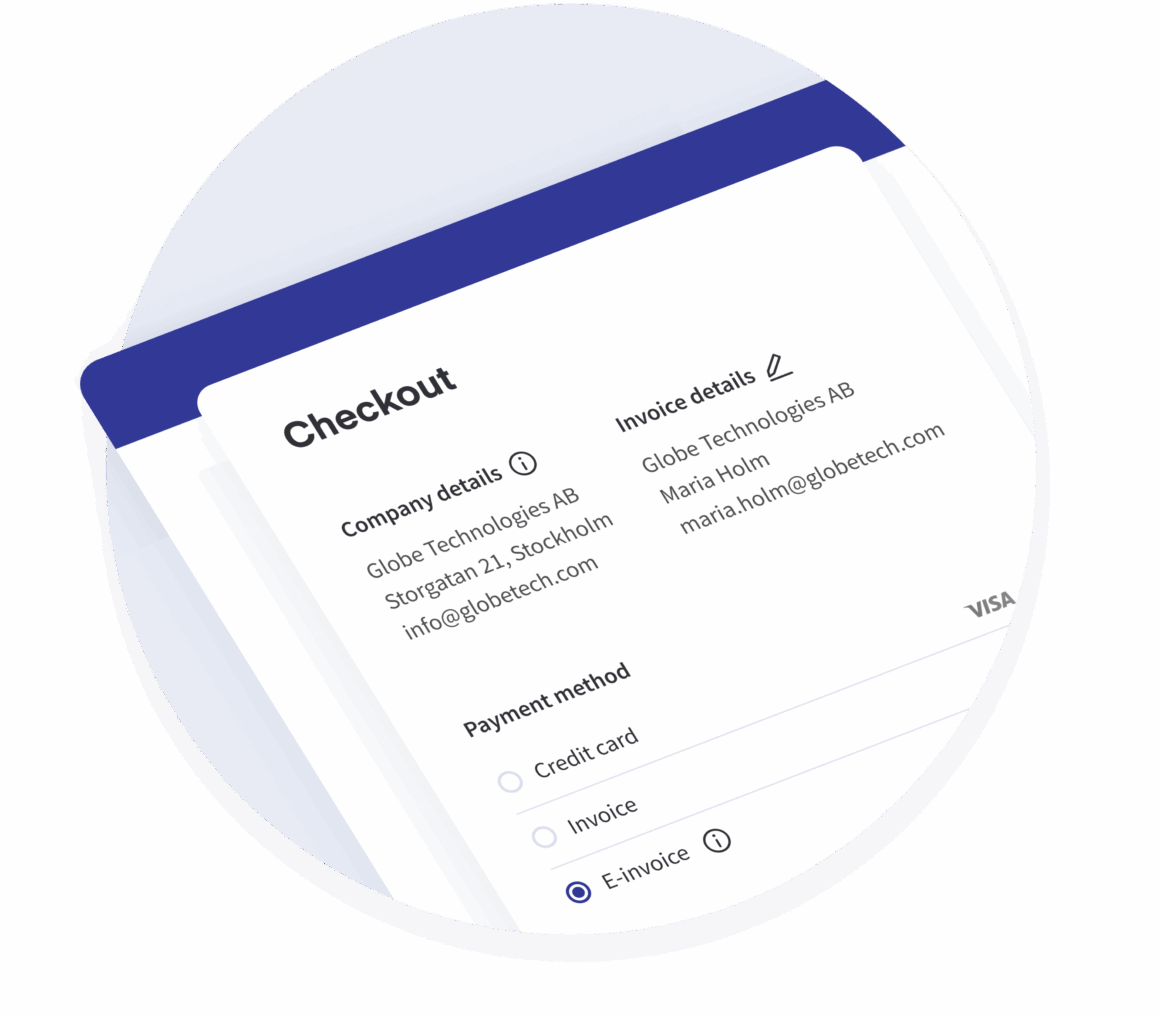
Order-to-cash doesn’t have to be a headache for your teams or your clients. Our order-to-cash solution Autobilling with end-to-end automation includes all the features you need to digitize and streamline your sales transactions.
Frequently asked questions
What is order-to-cash (O2C)?
Order-to-cash is a subset of the overall sales process. It covers every step a business performs between a customer placing an order and the business receiving payment, including order management, credit checks, fulfillment, shipping, invoicing, accounts receivable, payment collection, and reporting.
What’s the difference between B2B and B2C payments?
B2C transactions are usually simple, single-tier, and rely heavily on credit cards or cash. B2B payments are more varied, involve larger cash amounts, and are typically slower and more logistically complex because they require more verifications and decisions throughout the process.
What are the main steps in the O2C process?
The order-to-cash process generally breaks down into order management, credit management, fulfillment, shipping, invoicing, accounts receivable, payment collection, factoring (when used), and reporting.
What is DSO (days sales outstanding)?
Days sales outstanding (DSO) measures how long it takes a business to receive payment after a sale is made. It’s a key cash-flow indicator, especially for companies running on credit, since it helps track debt and earnings accurately.
What are the most common B2B payment methods?
Common B2B payment methods include checks, wire transfers, automated clearing house (ACH) transfers, virtual cards, traditional payment gateways, and B2B-specific payment gateways. Digital methods are steadily replacing paper-based ones such as checks and cash.
How can automation improve order-to-cash?
Automation speeds up order management, credit checks, invoicing, and reporting while reducing manual data entry and paperwork errors. It typically results in faster payments, lower operating costs, better client satisfaction, and clearer visibility into cash flow across the whole O2C process.