Qvalia’s Business Continuity Management System (BCMS) has been certified against ISO 22301:2019, the international standard for business continuity planning and organizational resilience.
Qvalia continues to strengthen its commitment to security, resilience, and operational excellence. We are proud to announce that we have achieved ISO 22301:2019 certification for our Business Continuity Management System (BCMS).
The certification was completed with an effective starting date of April 30, 2026. British Assessment Bureau, part of the Amtivo Group, conducted the audit.
The ISO 22301 certification complements our existing ISO 27001 certification and demonstrates Qvalia’s ability to maintain critical services during disruptions — whether technical incidents, supply chain issues, or other unforeseen events. For our customers and partners who rely on Qvalia’s platform for business-critical transactions, this certification provides assurance that continuity and recovery capabilities are independently verified and continuously maintained.
Learn more about our work with security, trust, and performance.
What is ISO 22301?
ISO 22301 is the internationally recognized standard for Business Continuity Management Systems. It provides a framework for identifying potential threats to an organization and building the capacity to respond effectively, protecting the interests of stakeholders, reputation, and value-creating activities.
The standard specifies requirements for planning, establishing, implementing, operating, monitoring, reviewing, maintaining, and continually improving a management system to prepare for, respond to, and recover from disruptions. It is applicable to organizations of all sizes and industries, and is particularly relevant for service providers handling time-sensitive and business-critical processes.
What is a Business Continuity Management System?
A Business Continuity Management System (BCMS) is a structured framework of policies, procedures, and capabilities that ensures an organization can continue delivering products and services at acceptable levels during and after a disruption. It covers risk assessment, business impact analysis, recovery strategies, and regular testing to validate preparedness.
Related articles
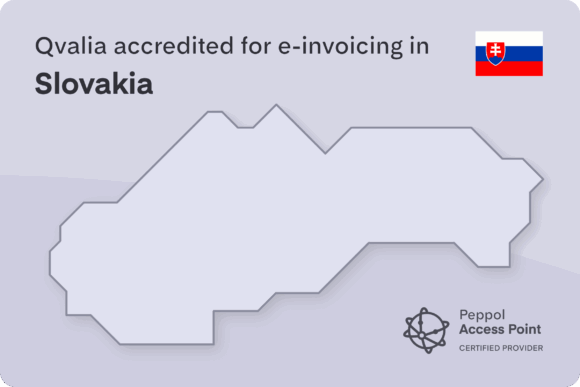
Qvalia has been accredited as a certified delivery service provider for electronic invoicing in Slovakia, supporting companies, software platforms, and partners preparing for the …
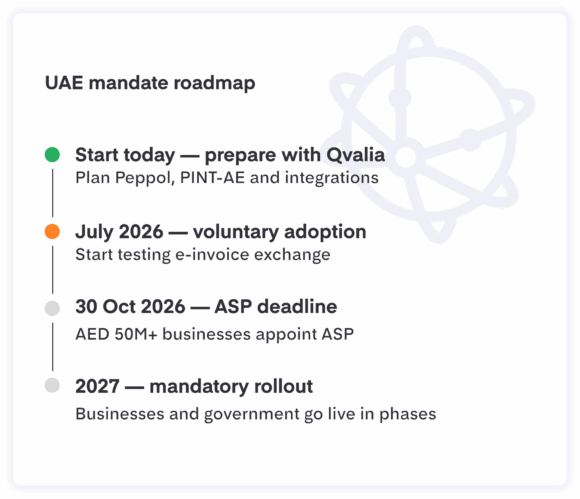
The UAE’s e-invoicing mandate is becoming a concrete implementation project for finance, tax, and technology teams. The Ministry of Finance and the Federal Tax Authority are introducing the UAE Electronic Invoicing System in phases, with voluntary adoption starting in 2026 and mandatory implementation beginning in 2027.
Qvalia is now listed in the Cloud Security Alliance STAR Registry — the standard reference for evaluating cloud provider security.