Updated 22 October 2026. This article was first published in 2022. It now reflects the CTC models in use in 2026 and the EU’s ViDA rules.
Continuous transaction controls (CTC) give tax authorities access to invoice data when a transaction happens, instead of in a later audit. Countries use different models. In some, the tax authority must clear each invoice before it counts as issued. In others, invoice data is reported shortly after the invoice is sent. A growing number use a decentralized model, where certified service providers exchange the invoice and report the tax data. In the EU, ViDA makes digital reporting mandatory for cross-border B2B transactions from 1 July 2030.
The main CTC models
| Model | How it works | Examples |
| Post-audit (no CTC) | Invoices go directly between the parties. The tax authority relies on VAT returns and audits afterwards. | Sweden, Denmark, and Germany today |
| Real-time or periodic reporting | The invoice goes to the buyer, and a subset of the invoice data is reported to the tax authority within a set time. | Hungary (Online Számla), Spain (SII) |
| Centralized clearance | The invoice passes through the tax authority’s platform, which validates it before it is delivered or counts as issued. | Italy (SdI), Poland (KSeF), Saudi Arabia, India, Mexico |
| Decentralized CTC and exchange (DCTCE) | Certified service providers exchange the invoice between the parties and report tax data to the tax authority. This is often called the five-corner model. | UAE, Singapore, Slovakia |
Clearance models started in Latin America. In Brazil, an electronic invoice (NF-e) is only valid once the tax authority has received it before the taxable event. Mexico requires CFDI electronic invoices, in version 4.0 since 2022. In Europe, Italy introduced general B2B clearance in 2019.
How the Peppol five-corner model works
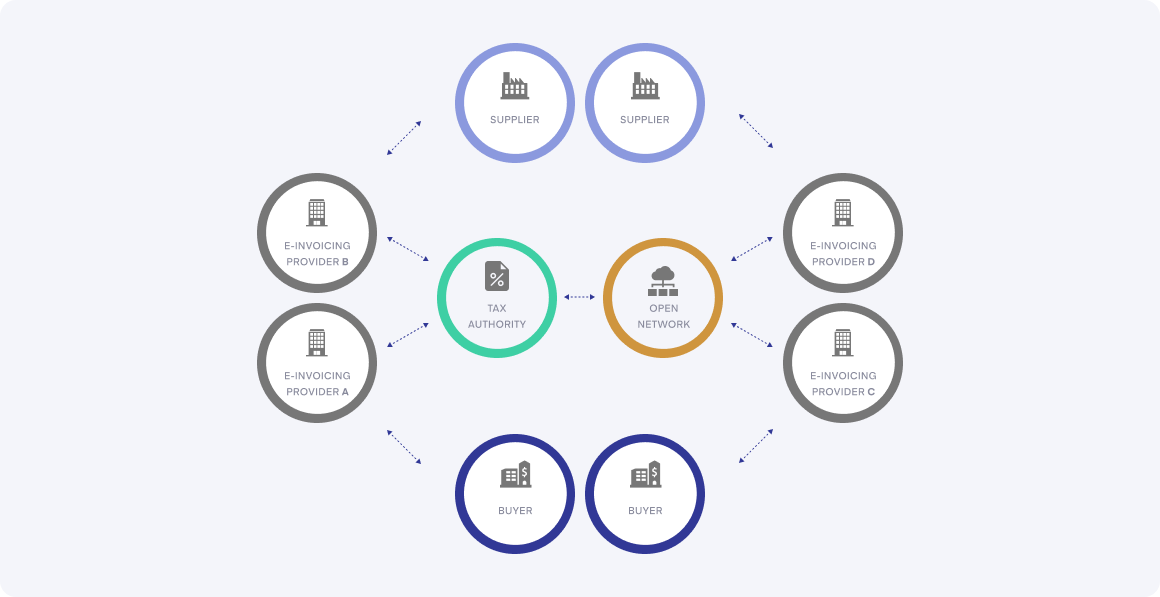
In the Peppol four-corner model, the seller (C1) sends the invoice through its service provider (C2) to the buyer’s service provider (C3), which delivers it to the buyer (C4). In OpenPeppol’s CTC model, the tax administration or its designated service provider becomes C5. C2 and C3 send Tax Data Documents with the relevant invoice data to C5, while the invoice itself continues to flow between the parties.
OpenPeppol calls this “Decentralised Continuous Transaction Controls and Exchange” (DCTCE). It is described in the Peppol CTC Reference Document (2021) and its 2023 addendum. There is no single global Peppol CTC specification. Instead, Tax Data Document specifications are published per country, currently for the UAE, Slovakia, and Oman. OpenPeppol is also running a ViDA pilot, started in November 2024, to test the model for EU digital reporting.
Where CTC stands in 2026
| Country | Model | Status |
| Italy | Clearance via SdI | B2B e-invoicing since 1 January 2019. An invoice counts as issued only once it has been sent to SdI. |
| Poland | Clearance via KSeF | Mandatory from 1 February 2026 for the largest taxpayers and from 1 April 2026 for all others. |
| Romania | Invoices uploaded to RO e-Factura | B2B since 2024 and B2C since 2025. |
| Hungary | Real-time invoice reporting | Online Számla, with extended rules since January 2021. |
| Greece | myDATA reporting and B2B e-invoicing via certified providers | Large businesses from March 2026, others from November 2026. |
| Spain | Reporting (SII), Verifactu, and planned B2B e-invoicing | Verifactu from 2027. B2B e-invoicing from 6 October 2027 for turnover above EUR 8 million and from 6 October 2028 for others. |
| France | Decentralized exchange via certified platforms, with e-reporting | Receiving for all and issuing for large and mid-sized companies since 1 September 2026, small companies from 1 September 2027. |
| Croatia | Fiscalisation 2.0: issuer and receiver report data | From 1 January 2026 for VAT payers. |
| Slovakia | Peppol five-corner model | Voluntary in 2026, mandatory for domestic B2B and B2G from 1 January 2027. |
| Belgium | Peppol B2B exchange, no reporting yet | Mandatory since 1 January 2026. E-reporting is planned for 2028 but not yet law. |
| Germany | No CTC | Businesses must be able to receive e-invoices since 2025. A reporting system is under discussion, with no law or dates. |
| Netherlands | Model not yet decided | The government plans domestic B2B e-invoicing from 1 July 2030 and reporting from 1 July 2031. |
| Sweden | No CTC decided | A government inquiry (Dir. 2026:9) reports by 30 November 2027. |
| UAE | Peppol five-corner model via Accredited Service Providers | From 1 January 2027 for revenue of AED 50 million or more, and from 1 July 2027 for others. |
| Singapore | InvoiceNow with IRAS as the fifth corner | Phased in since 1 November 2025 for new voluntary GST registrants, with wider phases from 2028 to 2031. |
| Saudi Arabia | Clearance for B2B invoices | Integration phase rolled out in waves since 2023. |
| Malaysia | MyInvois validation by the tax authority | Phased in from 2024 to 2026. |
For country requirements in more detail, see our complete country list and the step-by-step guides for France, Slovakia, and the UAE.
ViDA: the EU model from 2030
ViDA introduces digital reporting requirements for cross-border B2B transactions within the EU from 1 July 2030, based on structured e-invoices that follow EN 16931. Member states may introduce domestic e-invoicing and reporting, and those that had real-time reporting in place before 2024 must align their systems with the EU model by 1 January 2035. Read more in ViDA explained: VAT in the Digital Age timeline and what to do before 2030.
What CTC means for your business
- Correct data at issue. In clearance countries, an invoice the tax platform rejects has not been issued.
- Your provider is part of compliance. In decentralized models, only accredited or certified providers may exchange and report invoices, so check accreditation in each market.
- Several models at once. If you trade in many countries, you will need to handle clearance, reporting, and exchange models in parallel.
- Structured data. Invoices built on EN 16931 make it easier to meet different national rules from one data model.
How Qvalia helps
Qvalia is a certified Peppol Access Point and is certified for Slovakia’s eFaktúra framework, which uses the five-corner model. Review Qvalia’s Peppol and e-invoicing country coverage or read the short summary What are CTC models? in our knowledge base.
Sources: Peppol CTC Reference Document, Addendum, Council Directive (EU) 2025/516, and the national tax authority sites linked from our country guides.

Related articles
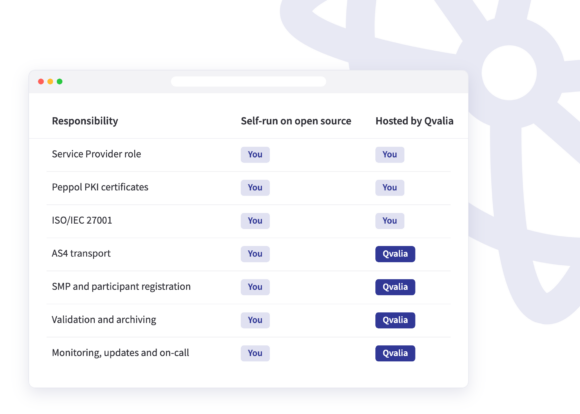
How to set up your own Peppol Access Point: run it yourself on open-source software such as Oxalis or phase4, or outsource operations to a Hosted Access Point. What each route covers, the 2027 network requirements and national accreditation.
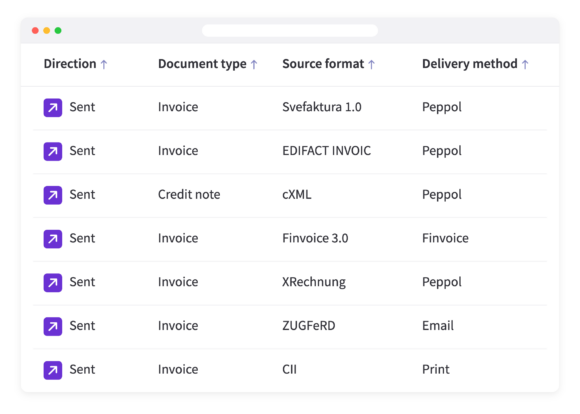
Qvalia’s Transaction API now accepts Svefaktura 1.0, EDIFACT, cXML, Finvoice, XRechnung, CII and ZUGFeRD, converts them to Peppol BIS Billing 3.0 and delivers them.
Qvalia is now connected to ELMA, the Norwegian Digitalisation Agency’s receiver register for the Norwegian market. This means we can register our customers in …